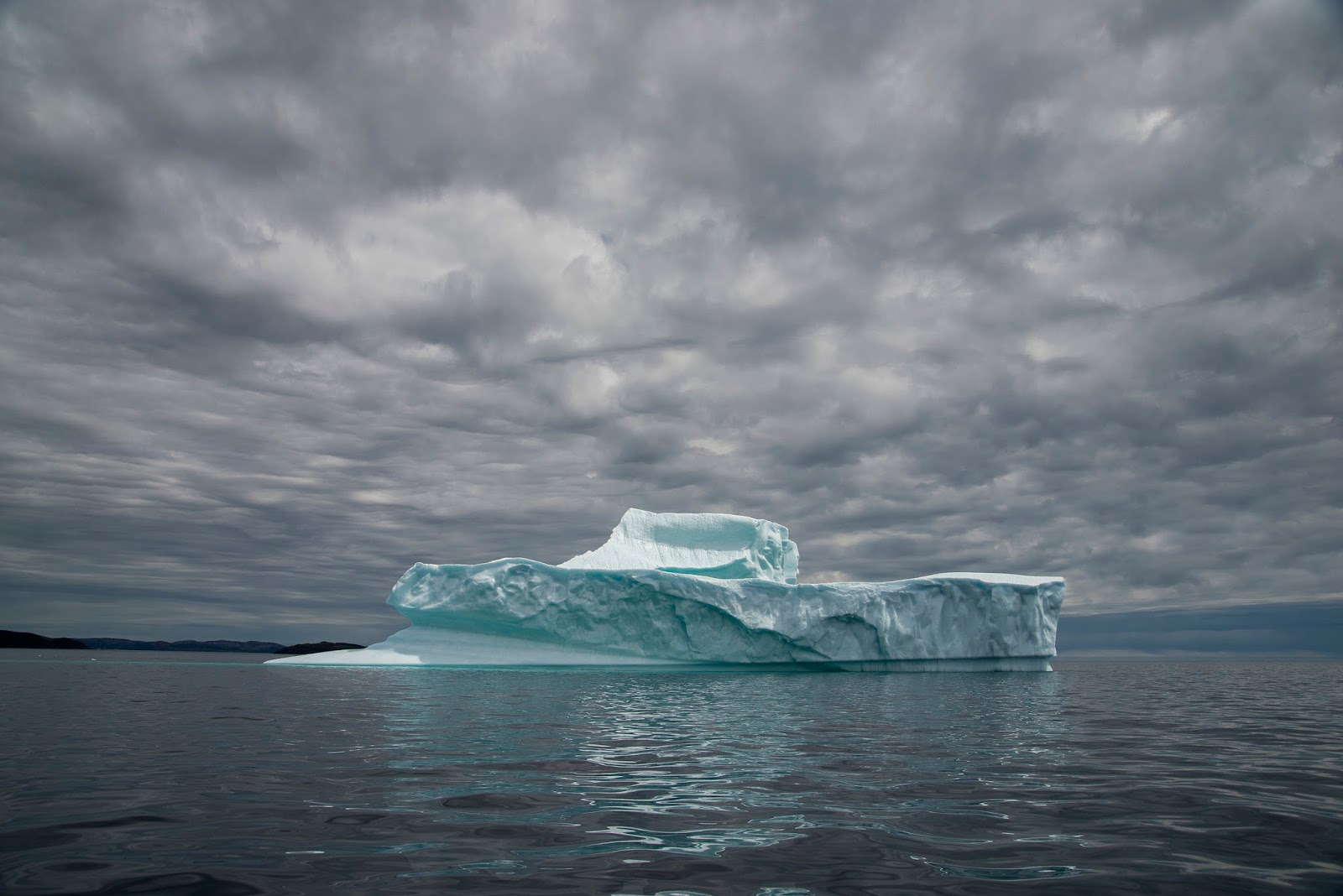
Did you know that one of the
best places in the world to photograph icebergs is in iceberg alley off
the coast of Newfoundland, Canada? We do, and that’s why we have been
running photography tours and workshops to photograph these incredible
structures for years.
On our tours you can live the life of a lighthouse keeper overlooking “Iceberg Alley”.
Hear
the Killer Whales’ call echoing off massive icebergs in your private
cove and awaken to the sounds of the Humpbacks calling you across vast
stretches of the North Atlantic. Explore the rugged landscape made
famous in “The Shipping News”, the Pulitzer prize-winning novel Judi
Dench, Kevin Spacey movie.
Feel the salt spray sting your face as
you journey amidst the dolphins and whales. As you land in the cove,
imagine you are returning home to the sod huts, thousands of years old,
which lay undisturbed here. Forge a link with ancient humans as you
stand in the remains of their huts overlooking the cove and picture the
tiny beach coming to like as it was eons ago. Your home for a portion of
our trip lies atop the cliffs at the northern tip of this deserted
island.
The contrast of the rugged beauty of the island and the
cosy luxury of our Lighthouse Inn will bring back your childhood
feelings of laying by the fire as a storm raged outside. Imperceptibly
your priorities in life will shift as you become part of the primal
connection between humans and the remote reaches of the sea.
You
are now in the best spot on earth to visit with whales and icebergs. At
dawn, be certain to introduce yourself to your only neighbors – the
whales migrating past your doorstep. An abandoned fishing village near
the lighthouse is a great walking destination today. Learn of the tragic
but romantic mass murder and suicide that inevitably lead to its
demise. Our audio app of the island offers interpretation as you wander.
View
the “vast cathedrals of ice”. On sunny days they appear lit from inside
and on dull days other senses take over as they seem to grow in size.
Their chilling effect spreads to your mind and you feel a timeless
empathy for sailors who have dreaded these giants for millennia.
Icebergs
are edges of glaciers that have broken off and slipped into the ocean.
Glaciers form on land by snow building up over thousands of years. Each
layer of snow compresses those below until, 60 to 70 metres down,
glacial ice forms. Glaciers then "flow" or "creep" towards the ocean
under their own weight, and eventually slip in. The glaciers of western
Greenland flow at speeds of up to seven kilometres a year, among the
fastest moving in the world. After slipping into the ocean, the bergs
float in frosty arctic bays melting slowly, if at all, until passing
through the Davis Strait and into the Labrador Current which carries
them south into Iceberg Alley. Once they head south, they rarely last
more than one year.
Every
year about 40,000 medium- to large-sized icebergs break off, or calve,
from Greenland glaciers. Only about 400-800 make it as far south as St.
John's, but these numbers can vary greatly from year to year. The
chances of seeing icebergs in a particular area depend on the number of
bergs, wind direction, oceans current and temperatures, and the amount
of sea ice, or pack ice.
We monitor the icebergs every year and
work with locals to predict when and where they will wail past our
locations… and time our tours appropriately.
And just think,
almost 90% of an iceberg is under water, hence the phrase “tip of the
iceberg.” Its maximum width under water is 20% to 30% larger than you
can see at the surface. The average depth, or draught of an iceberg, is
slightly less than its apparent length above water.
How big can these icebergs get?
Well, in the Northern Hemisphere, the largest iceberg on record was
encountered in 1882 near Baffin Island. It was 13 km long, 6 km wide,
and was about 20 m above water. It weighed over 9 billion tonnes –
enough for everyone in the world to drink a litre of water a day for
more than 4 years. Icebergs from Antarctica can be many times larger. In
1987 an iceberg, with an area of 6,350 sq. km, calved from the Ross Ice
Shelf. It weighed about 1.4 trillion tonnes and could have provided
everyone in the world with 240 tonnes of pure drinking water.
Icebergs
can vary greatly in size, ranging from very large – greater than 10
million tonnes and hundreds of metres long – to large, medium, and small
bergs. The smallest are termed “bergy bits,” which are the size of a
small house, and “growlers,” which are the size of a grand piano. These
smaller pieces are hazardous to ships because radar may not pick them up
as they bob up and down among the waves. The average weight for a Grand
Banks-area iceberg is 100,000-200,000 tonnes – about the size of a
cubic 15-storey building.
Why don’t you come see for
yourself, we run tours to Newfoundland every year… but not just for the
icebergs… we see humpback whales, a variety of seabirds, and some of the
most photogenic landscapes Canada has to offer.
To see our 2016 tour, please visit this link.
http://northof49photography.com/new-page-1
To See our 2017 tour, please visit this link.
http://northof49photography.com/2017-tour-of-newfoundland