Showing posts with label photo tours in Canada. Show all posts

Thursday, March 3, 2016

The Largest Bald Eagle Migration in North America


Bald Eagle Workshop

This photo tour is centered on the largest bald eagle migration in North America. Between 2000 to 8000 bald eagles find their way to this area beginning in October to feed on the spawning salmon. They then stay in the area until later in the winter months to have their young before returning to their summer area in Northern BC and the Yukon.

Your guides(s) for this tour will guide you to the best locations for photographing the eagles in the Fraser Valley that is surrounded by the Cascade Mountain range. This is the fourth year we have returned to this location and Kevin Allen Pepper lived within 30 kilometers of this location for three years prior to running workshops here.

Primary Bird Species we will be photographing


We will also visit between peak eagle viewing time. We have seen the following species at these locations in previous years: Snowy Owl, Red Tailed Hawk, Pacific Loon, Red Throated loon, Grebe, Golden Eyes, Wood Ducks, Sandhill Cranes, Herons, Buffleheads, Mergansers, Egrets, Snow Geese, Mute Swans, Rough Legged Hawk, Canvas Back, Golden Eagles, Peregrine Falcon, Virginia Rail, Common Snipe and Great Horned Owl.

White trumpeter swans and snow geese also converge on the productive Harrison region every winter. These birds migrate to the Harrison Valley during the cold winter months, feeding mostly on corn left over from the fall harvest. Trumpeter swans and snow geese are often spotted swimming in the region’s many sloughs or feeding in the corn fields along the roads we drive on during the workshop.

Dates of Workshop: November 26 to November 30, 2016

The cost for the five day workshop is $2750CAD including taxes and $324 for a single room

To reserve a spot, a $1000CAD deposit per reservation.  The final installment to be made 90 days prior to the start of the workshop.

Guides for these workshops: Kevin Allen Pepper and Chris Pepper

The Maximum attendees per session are 4, the minimum attendees per session are 3. Bring your non-photographer spouse for $595 as there is a spa in Harrison with many sightseeing opportunities. (includes their accommodation and the same meals that are included in your workshop)

The tour cost includes all the following: Shared accommodation at a local hotel along the beach. A welcome meeting/dinner with your fellow photographers and your guides. All breakfasts, Daily snack lunches and drinks while on location, dinners, Personal hides to use during the workshop. Instruction in the field with your photographer guides with a maximum of 3 photographers per guide, Image critique (optional)

The tour cost does not include: International or domestic airfare. Travel Insurance, Alcohol, Items of personal nature, Anything not outlined as included. We begin the tour with a welcome meeting in the afternoon of day one as we get to know everyone and discuss the plans for the coming days. For the next five days we will make frequent visits to the different viewing grounds. Once on site, your instructors will utilize their knowledge of the area and the eagles; then guide you to that perfect location for obtaining your “once in a lifetime” shot in the picturesque British Columbia scenery.

We can also head out to some of BC's pristine landscape and waterfall photography locations in the lower mainland of British Columbia.

The tour size is limited to six photographers so you can count on minimal interruption throughout your journey in British Columbia. The maximum attendee to instructor ration is 3-1

What you will learn: We will focus on planning for a successful bird of prey shoot... from clothing, to gear, to positioning and planning techniques.

When we are out photographing raptors we will discuss camera settings, holding your camera properly and what settings to consider using to maximize the number of shots that you consider a "keeper". We will also discuss bird habits to watch for to increase your success.

When we return to the hotel we will then open up our laptops and discuss editing techniques to achieve sharper images, composition from cropping and introduce you to some techniques we use to create more appealing images.

Example of Secondary Species we will be photographing


Day One Events - Pick Up attendees from the Abbotsford Airport in Abbotsford, British Columbia and transported to our Hotel in Harrison Hot Springs. You should arrive to be picked up before 11am.

Meet and Greet Lunch for group at resort (included) after a photography shoot session with the eagles along the shores of the rivers.

Day Two Events - Today we will be visiting all our scouted locations where the eagles traditionally hunt and rest. Expect to be out photographing eagles from 730am till 330pm.

Night time editing session to look at your photos and help you make adjustments to capture better photos in the coming days

Full Breakfast / juice and snacks during the day and dinner is included

Day Three Events - Half of the day we will spend at the Delta Dykes or George C Reifel Bird Sanctuary and the other half of the day we will be visiting our scouted areas where the eagles traditionally hunt and rest.

Night time editing session to look at your photos and help you make adjustments to capture better photos.

Full Breakfast / juice and snacks during the day and dinner is included

Day Four Events - Today we will be visiting all our scouted locations where the eagles traditionally hunt and rest. Expect to be out photographing eagles from 730am till 330pm.

Night time editing session to look at your photos and help you make adjustments to capture better photos.

Full Breakfast / juice and snacks during the day and dinner is included

Day Five Events - We will be out photographing eagles at the various locations we have scouted until noon. After that we will take you to the airport. Please schedule your departures after 3pm and you will be transported to airport after one last morning photographing the eagles along the flats of the river’s edge.

Full Breakfast is included

If you are ready to see the largest Bald Eagle Migration in North America, or have some questions, please click on this link http://northof49photography.com/contact-us

Monday, November 2, 2015

Lets take a look at The Boreal Forest


When you look at Canada on a map you see geographical boundaries that divide up one of the largest countries on earth. You hear us mention places like British Columbia and Yukon, or the Kawartha Region of Ontario... but what you don't hear mentioned is the actual diversity of the landscapes that we visit, and what the draw is for us.

From the tundra in the far reaches of the north, to the Boreal forest, the largest forest on earth, to the taiga, the world's largest land biome, and this week we will be highlighting these three areas. So, please come back and visit our blog on Thursday and Friday to learn more about Canada, and the wonderful photographic opportunities that it has to offer.

Today we want to discuss the Boreal Forest

Canada's boreal forest comprises about one third of the circumpolar boreal forest that rings the Northern Hemisphere, mostly north of the 50th parallel. Other countries with boreal forest, also called taiga, include Russia, which contains the majority, and the Scandinavian and Nordic countries (e.g. Sweden, Finland, and Norway). The boreal region in Canada covers almost 60% of the country’s land area. The Canadian boreal region spans the landscape from the most easterly part of the province of Newfoundland and Labrador to the border between the far northern Yukon and Alaska. The area is dominated by coniferous forests, particularly spruce, interspersed with vast wetlands, mostly bogs and fens. The boreal region of Canada includes eight Eco-zones. While the biodiversity of regions varies, each Eco-zone has a characteristic native flora and fauna.

The Canadian boreal region represents a tract of land over 1,000 kilometers wide separating the tundra in the north and temperate rain forest and deciduous woodlands that predominate in the most southerly and westerly parts of Canada. Canada's boreal forest is also considered to be the largest intact forest on earth, with around 3 million square kilometers still undisturbed by roads, cities and industrial development. Its high level of intactness has made the forest a particular focus of environmentalists and conservation scientists who view the untouched regions of the forest as an opportunity for large-scale conservation that would otherwise be impractical in other parts of the world.

The boreal region contains about 14% of Canada’s population. With its sheer vastness and forest cover, the boreal makes an important contribution to the rural and aboriginal economies of Canada, primarily through resource industries, recreation, hunting, fishing and eco-tourism. Hundreds of cities and towns within its territory derive at least 20% of their economic activity from the forest, mainly from industries like forest products, mining, oil and gas and tourism. The boreal forest also plays an iconic role in Canada’s history, economic and social development and the arts.

The Canadian boreal forest in its current form began to emerge with the end of the last Ice Age. With the retreat of the Wisconsin Ice Sheet 10,000 years ago, spruce and northern pine migrated northward and were followed thousands of years later by fir and birch. About 5000 years ago, the Canadian boreal began to resemble what it is today in terms of species composition and biodiversity.

Canada’s boreal landscape contains more lakes and rivers than any comparably sized landmass on earth. It has been estimated that the boreal region contains over 1.5 million lakes with a minimum surface area of 40,000 square meters as well as some of Canada’s largest lakes. Soft water lakes predominate in central and eastern Canada and hard water lakes predominate in Western Canada. Most large boreal lakes have cold water species of fish like trout and whitefish, while in warmer waters, species may include northern pike, walleye and small mouth bass.

The boreal forest also has vast areas of wetland, particularly bogs and fens. Two wetland areas, the Hudson Bay Lowland and the Mackenzie River basin, are among the ten largest wetlands in the world. The boreal forest wetlands provide wildlife habitat (particularly for migratory birds), they maintain water flow in rivers, and they store significant amounts of carbon that otherwise would be released to the atmosphere.

There may be as many as five billion land birds, including resident and migratory species. The Canadian boreal region contains the largest area of wetlands of any ecosystem of the world, serving as breeding ground for over 12 million water birds and millions of land birds, the latter including species as Canada goose, common loon, great blue heron, numerous hawks, owls and ducks, ruffed and spruce grouse, belted kingfisher, gray jay, robin and other thrushes, black-capped and boreal chickadees, several nuthatches, vireos and grosbeaks, as well as many species of warblers and sparrows, hummingbirds, woodpeckers and passerines (or perching birds, often referred to as songbirds). It is estimated that the avian population of the boreal represents 60% of the land birds in all of Canada and almost 30% of all land birds in the United States and Canada combined

Prominent mammals in the forest include moose, caribou, deer. black bear, wolf, beaver, muskrat, varying hare, red squirrel, deer mouse, and red-backed vole.

In 2016 and 2017 we will be headed back to photograph these animals and this captivating region. Please check out our tours and workshops. You can find these tours and workshops here on our Canadian Workshop and Tour page here... http://northof49photography.com/photo-workshops/

Thursday, October 29, 2015

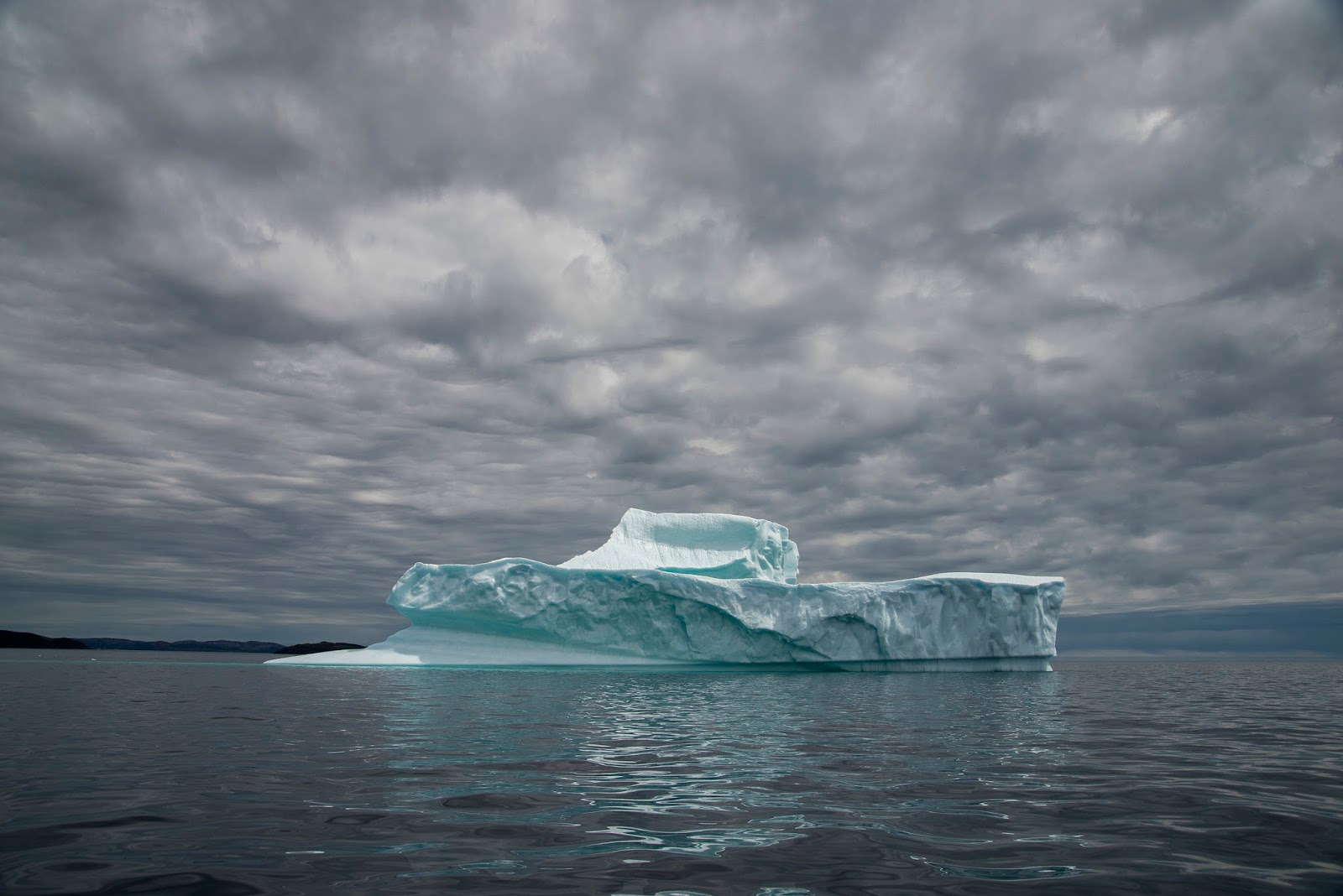
Canada Destination Spotlight - Iceberg Alley, the best place on earth to photograph icebergs


Did you know that one of the best places in the world to photograph icebergs is in iceberg alley off the coast of Newfoundland, Canada? We do, and that’s why we have been running photography tours and workshops to photograph these incredible structures for years.

On our tours you can live the life of a lighthouse keeper overlooking “Iceberg Alley”.

Hear the Killer Whales’ call echoing off massive icebergs in your private cove and awaken to the sounds of the Humpbacks calling you across vast stretches of the North Atlantic. Explore the rugged landscape made famous in “The Shipping News”, the Pulitzer prize-winning novel Judi Dench, Kevin Spacey movie.

Feel the salt spray sting your face as you journey amidst the dolphins and whales. As you land in the cove, imagine you are returning home to the sod huts, thousands of years old, which lay undisturbed here. Forge a link with ancient humans as you stand in the remains of their huts overlooking the cove and picture the tiny beach coming to like as it was eons ago. Your home for a portion of our trip lies atop the cliffs at the northern tip of this deserted island.

The contrast of the rugged beauty of the island and the cosy luxury of our Lighthouse Inn will bring back your childhood feelings of laying by the fire as a storm raged outside. Imperceptibly your priorities in life will shift as you become part of the primal connection between humans and the remote reaches of the sea.

You are now in the best spot on earth to visit with whales and icebergs. At dawn, be certain to introduce yourself to your only neighbors – the whales migrating past your doorstep. An abandoned fishing village near the lighthouse is a great walking destination today. Learn of the tragic but romantic mass murder and suicide that inevitably lead to its demise. Our audio app of the island offers interpretation as you wander.

View the “vast cathedrals of ice”. On sunny days they appear lit from inside and on dull days other senses take over as they seem to grow in size. Their chilling effect spreads to your mind and you feel a timeless empathy for sailors who have dreaded these giants for millennia.

Icebergs are edges of glaciers that have broken off and slipped into the ocean. Glaciers form on land by snow building up over thousands of years. Each layer of snow compresses those below until, 60 to 70 metres down, glacial ice forms. Glaciers then "flow" or "creep" towards the ocean under their own weight, and eventually slip in. The glaciers of western Greenland flow at speeds of up to seven kilometres a year, among the fastest moving in the world. After slipping into the ocean, the bergs float in frosty arctic bays melting slowly, if at all, until passing through the Davis Strait and into the Labrador Current which carries them south into Iceberg Alley. Once they head south, they rarely last more than one year.


Every year about 40,000 medium- to large-sized icebergs break off, or calve, from Greenland glaciers. Only about 400-800 make it as far south as St. John's, but these numbers can vary greatly from year to year. The chances of seeing icebergs in a particular area depend on the number of bergs, wind direction, oceans current and temperatures, and the amount of sea ice, or pack ice.

We monitor the icebergs every year and work with locals to predict when and where they will wail past our locations… and time our tours appropriately.

And just think, almost 90% of an iceberg is under water, hence the phrase “tip of the iceberg.” Its maximum width under water is 20% to 30% larger than you can see at the surface. The average depth, or draught of an iceberg, is slightly less than its apparent length above water.


How big can these icebergs get? Well, in the Northern Hemisphere, the largest iceberg on record was encountered in 1882 near Baffin Island. It was 13 km long, 6 km wide, and was about 20 m above water. It weighed over 9 billion tonnes – enough for everyone in the world to drink a litre of water a day for more than 4 years. Icebergs from Antarctica can be many times larger. In 1987 an iceberg, with an area of 6,350 sq. km, calved from the Ross Ice Shelf. It weighed about 1.4 trillion tonnes and could have provided everyone in the world with 240 tonnes of pure drinking water.

Icebergs can vary greatly in size, ranging from very large – greater than 10 million tonnes and hundreds of metres long – to large, medium, and small bergs. The smallest are termed “bergy bits,” which are the size of a small house, and “growlers,” which are the size of a grand piano. These smaller pieces are hazardous to ships because radar may not pick them up as they bob up and down among the waves. The average weight for a Grand Banks-area iceberg is 100,000-200,000 tonnes – about the size of a cubic 15-storey building.


Why don’t you come see for yourself, we run tours to Newfoundland every year… but not just for the icebergs… we see humpback whales, a variety of seabirds, and some of the most photogenic landscapes Canada has to offer.

To see our 2016 tour, please visit this link. http://northof49photography.com/new-page-1

To See our 2017 tour, please visit this link. http://northof49photography.com/2017-tour-of-newfoundland