Showing posts with label Yukon photography tour. Show all posts

Sunday, February 28, 2016

Yukon Territory in Canada, a photographers dream location.


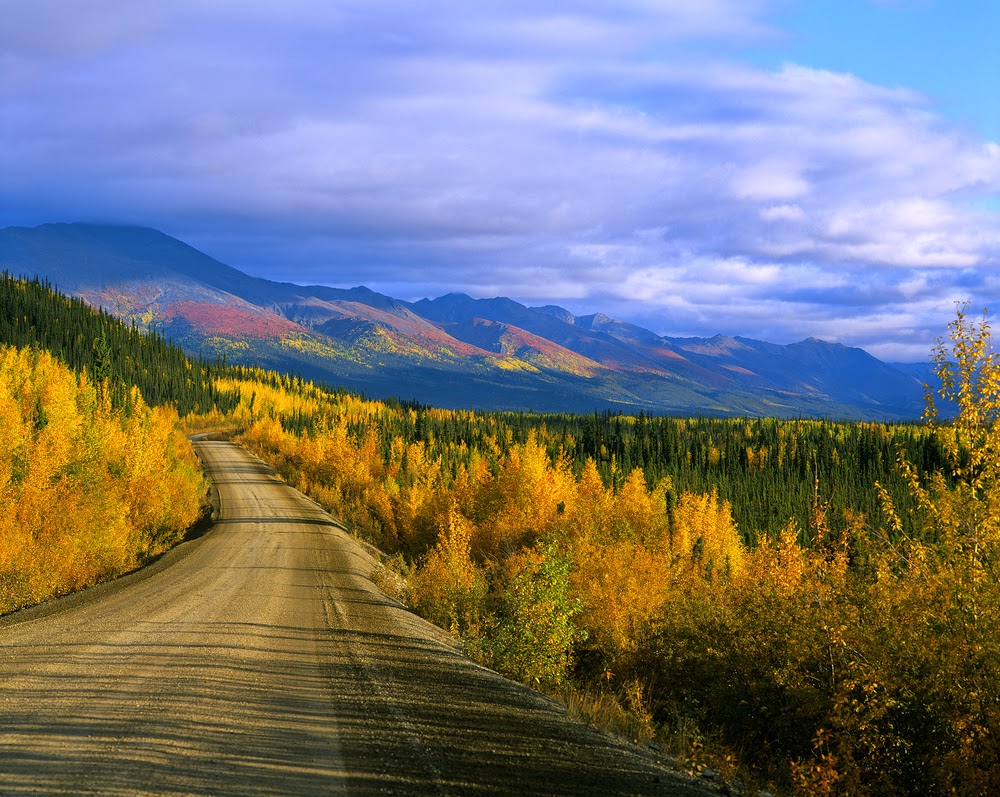
Yukon Landscapes in the Autumn
“Kevin (K2) promised me an awesome trip up to Canada’s north... but i had no idea i would be that amazed by the beauty of the landscapes and northern lights. Thanks to Kevin and his teaching, i came home with images i was proud of.”
— David L.

This trip is designed to give you the opportunity to photograph all the diversity that the Yukon has to offer. We will cover the area around Whitehorse, Kluane National Park and the Dempster Highway. You will be shooting mountain landscapes, macro images of fall foliage, travel type photography of historical streetscapes, the wildlife, northern lights and other long exposure night photography.

Dates of Yukon Trip: Eight days from August 23rd to August 30th, 2016 with Kevin Allen Pepper

Price: $4195CAD ($3110USD) including taxes, with $500CAD ($370USD) single supplement

Deposit to Secure your spot:  $750CAD, balance due on May 15, 2015

Attendees: (currently only 1 spot left)

Group Leader:  Kevin Allen Pepper - our tour leader that has been leading groups to the Yukon for the past five years.

Included:  Airport pick-up and drop-off, shared accommodation, meals as outlined in the itinerary, Snacks, soft drinks, water during the day, Daily transportation via an 8 passenger Suburban or equivalent. Hot drinks and snacks during aurora viewing nights.

Not Included:  Alcoholic beverages, International flights, Items of personal nature, Items not listed as included

Day One - A day to Welcome You to the Yukon

Today you will arrive in Whitehorse from Home. You should schedule your arrivals so that you arrive in Whitehorse before 4:30pm. You will get picked up at the airport and shuttled to the hotel in Whitehorse.

You can unpack and have some free time before dinner. Today would be your day to explore Whitehorse, buy your souvenirs for the children and grandchildren because once we gather for dinner our excursion begins...

We will meet for a group dinner and go over the itinerary, get to know one another and discuss the various photography situations we will find ourselves in this week.

After dinner, if the skies are clear, we will head out into the countryside for one of many nights of aurora photography. There are a number of spots around Whitehorse that we have identified with interesting foreground elements that will enhance your aurora images.

Accommodation in Whitehorse - Dinner is included

Day Two - The Southern Loop

Today is a day to drive to Dawson City. Dawson City... the epitome of a Gold Rush town in Northern Canada. We will get picked up and begin one of two journeys along the Dempster Highway. The landscapes here are breathtaking and the fall colours will be covering the landscapes like a multi colored blanket. Your highlight on this leg of the trip is Tombstone Territorial Area.

And let’s not forget about the wildlife. The porcupine herd of Caribou will be in the area in late August on their annual migration. It is our intent to introduce you to one of Canada's largest animal migration, in one of the most photogenic fall landscapes Canada offers.

If the aurora is dancing... come out and enjoy the sight near the Arctic Circle... something you will never forget.

Accommodation in Dawson City. Included is breakfast, snacks during the day and dinner.

Day Three - Headed to the Klondike

 Here you will see vast expanses of fall colours and distant mountain ranges that offer everything from panorama's to macro photography, and yes, even the odd fox, wolf, caribou and an abundance of bird species that will be feeding before their southern migration.

If the aurora is dancing... come out and enjoy the sights from just south of the Arctic Circle... something you will never forget.

Accommodation in Dawson City. Included is breakfast, snacks during the day and dinner.

Day Four - Tombstone Fall Colors

We will once again continue down the Dempster or Alaska highway for a chance to photograph the remote painted landscapes one more time.

In between our golden hour photo shoots you will have a chance to explore the preserved Klondike buildings and see how the original settlers lived hundreds of years ago. If you are adventurous... it’s a sour toe cocktail for you... and yet another claim to fame that you will tell your friends and family that you did while in the Yukon.

Accommodation in Dawson City. Included is breakfast, snacks during the day and dinner.

Day Five - Return to Whitehorse

Today we return to Whitehorse and pass through some of the best landscapes to photograph the fall colours in the Yukon. Its an early morning departure after breakfast in order to arrive back in Whitehorse before dinner.

After dinner, if the skies are clear, its another night in the rural areas north of Whitehorse to photograph the aurora under minimal light pollution.

Accommodation in Whitehorse. Included is breakfast, snacks during the day and dinner.

Day Six - - Saving the best for last, well, in my opinion anyways... its a drive west to Kluane National Park.

But before we get to Kluane, we will visit the Whitehorse wildlife Preserve. You will have just spent 5 days photographing areas that many of the animals in the preserve live in. If we were not lucky enough to see these animals in the wild, we want to give you the opportunity to photograph them in a smaller wildness area. You will have the opportunity to photograph, Lynx, Arctic fox, caribou, elk, Bison, Thinhorn Sheep, Mountain Goats and Mule deer.

Then it’s on to Kluane. If you've ever imagined standing amidst a sweeping landscape of mountain valleys carved by glaciers and sprinkled with alpine wildflowers and vibrant fall colours, you will get to live your dream in Kluane National Park and Reserve of Canada. An icon of North America and the center piece of the Kluane region in Yukon, Kluane National Park and Reserve is one of our natural treasures and was declared a World Heritage Site in 1979.

Accommodation in Haines Junction area, Breakfast and Dinner Included

Say Seven - Kluane National Park - A world Heritage sight

Encompassing breathtaking views of lush valleys, mountain ranges, Kluane National Park and Reserve of Canada is part of the largest internationally protected wilderness area in the world. Four interconnecting wilderness parks in British Columbia, Alaska and the Yukon are designated a World Heritage Site.

We will take different hikes into the back country of Kluane before we gather and have a campfire dinner in the park as the sun prepares to set. After dinner, it’s a golden hour photo shoot at one of the two of the most beautiful lakes in the Yukon, Kluane Lake or Kathleen Lake.

Long into darkness we will remain in the area. You will be presented with golden hour and blue hour photography opportunities that end with a star show with zero light pollution, and maybe, a once in a lifetime chance to photograph an aurora show in this area. But if the aurora doesn't present itself, the night skies still offer the opportunity to learn how to easily create star trail photos or other night time long exposure photos.

Accommodation in Whitehorse, Breakfast and Dinner Included

Say Eight - Departure Day

Departure day. We will transfer you to the airport for your flights home. There are early morning flight options and late afternoon flight options for those that want to stay and do some shopping and sightseeing downtown Whitehorse before they depart. There are airport shuttle buses and we will have our vehicle to ensure that you get to the airport in time to get your flight... unless you want to stay. ;-)

If you see landscapes painted with crimson and amber by day and green and magenta skies at night in your future, click the link to contact us to get that last spot. http://northof49photography.com/contact-us

Sunday, April 5, 2015

Photography Tours to Yukon Canada

 
Yukon’s landscape was formed during the Ice Age. It’s past forms a unique part of the territory’s history. Over 20,000 years ago, a land bridge joined Asia and North America. Woolly mammoths and scimitar cats roamed this vast ice-free region known as Beringia. While the rest of the continent was cloaked in ice, much of the Yukon became an ecological refuge for plants and animals. This period is recalled in First Nations' legends of long-ago giants and the creation of the world from a flooded land.

During this time, Yukon’s original people migrated across the land bridge from Asia and inhabited an area near what is now known as Old Crow. They hunted mammoths, bison, horses and caribou. Over time, they established permanent settlements, some of which remain today as modern-day towns that we visit on some of our tours to the Yukon.
Fast forward a few million years and Yukon’s first visitors were Russian explorers. They came in search of furs and other resources in the 18th century. As more explorers from Europe arrived, First Nations people traded furs for tobacco, guns, and other goods. The fur trade developed as the Hudson's Bay Company and other independent traders established posts throughout the Yukon.
If you want to experience the same route, using the same mode of transportation as those early settlers, the dog sled, please check out our trips in late winter. Its your chance to photograph the northern lights and run your own dog sled through mountain trails over two century old. All the details can be found here. http://northof49photography.com/yukon-winter-photography-tour

Then, in August 1896 three men found gold on Bonanza Creek near Dawson City, launching the legendary Klondike Gold Rush. When word of the discovery reached the rest of the world, thousands of would-be prospectors headed north. By the turn of the century Dawson City was the largest city north of San Francisco and west of Winnipeg.


When the Klondike Gold Rush ended in 1903 more than 95 million dollars had been extracted from the Yukon's rivers… and still today, many mine the rivers and lands for gold that still is being extracted today.

When the ‘railway built of gold’ was completed in 1900, the White Pass and Yukon railway connected Whitehorse, Yukon to Skagway on the Alaskan coast. The $10 million railway project was considered an impossible task, but it was literally blasted through coastal mountains in just 26 months by thousands of men and 450 tons of explosives.

The White Pass and Yukon Route climbs almost 3,000 feet (900 m) in just 20 miles (32 km) and features steep grades, cliff-hanging turns, two tunnels and numerous bridges and trestles. The steel cantilever bridge was the tallest of its kind in the world when it was constructed in 1901.
 
This made way to a more economical route of travel, the Alaska Highway. The road to North America’s last frontier was built in 1942 to transport war supplies. Completed in only 8 months, more than 30,000 US Army personnel were involved in the construction of over 2,230 km of road to Alaska.

The Alaska Highway forever changed the Yukon. Boats and trains were replaced by the more efficient road system. Whitehorse grew to become the largest town in the Yukon, eventually becoming the capital city in 1953.


Today the Alaska Highway is a scenic paved route that is well-maintained and open year-round. Many of our tours travel this highway and our cameras enjoy the stunning landscapes day and night.
Every August, when the landscapes come alive with reds and gold, we travel the Alaska highway and Dempster Highway to photograph stunning landscapes you will rarely see elsewhere. You can see those tours here. 2015 trip - http://northof49photography.com/fall-colours-in-the-yukon Details for the 2016 trip coming soon. But to see the 2015 trip, please see here, http://northof49photography.com/fall-colours-in-the-Yukon

Today, contemporary Yukon strikes a balance between the conveniences of modern living and the beauty of a pristine nature. Yukon is one of three Canadian territories, Yukon is situated in the northwest corner of Canada's continental mainland.

It sits between the Canadian province of British Columbia and the Arctic Ocean, with Alaska to the west and the Northwest Territories to the east.

The Arctic Circle crosses through the Yukon and the territory has 430 kilometres of shoreline along the Beaufort Sea.
 
At 483,450 square kilometres (186,661 square miles), the Yukon is larger than California and covers more area than Belgium, Denmark, Germany and the Netherlands combined. It represents 4.8% of Canada's total land area.

The name “Yukon” originated from the Locheux native word "Yuk-un-ah," meaning "Great River," referring to the Yukon River that flows across the territory into Alaska.

As of September 2012, there were 36,304 people living in the Yukon. Of those, 27,687 were living in the capital city of Whitehorse.

The official bird is the raven and our flower is fireweed. These aren't just symbolic—they're everywhere! You'll see ravens throughout the Yukon any time of the year, and it's the subject of many First Nations stories. In summer our forests, riverbeds and roadsides are ablaze with magenta fireweed.

Yukon is dry, and the continental climate results in a wide variety of weather year-round. Humidity is very low, so summers can be hot and dry while our winter coldness is less harsh than in damper climates, making our winter tours more comfortable than most others in Canada.


Whitehorse is Yukon’s capital and a major northern hub. It enjoys facilities, services and businesses far beyond the expectation of a city of 30,000. It's a big little city surrounded by wilderness with the amenities of a much larger destination paired with the friendly demeanour of a close-knit community.
Yukon is home to Canada’s highest peak, the world’s largest non-polar ice fields, several Canadian Heritage Rivers and healthy, abundant wildlife. From the crimson carpet of the tundra, to the majestic mountain peaks, the vast pristine wilderness of the Yukon beckons.

Yukon’s jaw-dropping natural features are what set this place apart. This is a land rich with dramatic mountain vistas, wild rivers and crystal clear lakes of stunning blue and emerald green. Close to 80 per cent remains pristine wilderness, untouched by humans and abundant with wildlife that we visit to photograph.

In the fall, take a trip on horseback into the rural landscapes and native animals. Please see that trip here, http://northof49photography.com/northern-lights-and-fall-colors-workshop-in-nwt
At least twenty mountains in the St. Elias Range in southwest Yukon exceed 4,000 metres, and more than a handful exceed 5,000 metres. Towering over them all and surrounded by vast icefields is Mount Logan, Canada's highest peak at 5,959 m.

The southern part of the Yukon is covered by vast coniferous boreal forest, rugged mountains, and a network of rivers and lakes. In the North, rolling arctic tundra stretches to the Arctic Ocean. Yukon’s north coastline includes beaches, cliffs, sea ice, lagoons and coastal plains. But it’s the transitional landscapes north of Whitehorse and in the Tombstone Mountains that photographers dream about.
 
Yukon has over 70 canoeable wilderness rivers including four Canadian Heritage Rivers. Countless scenic lakes dot the landscape making the Yukon a significant reservoir of fresh water. Almost two-thirds of the territory is drained by the mighty Yukon River, Canada's second longest river.
The Big Salmon, Teslin, and storied Yukon River combine scenery, wildlife viewing, history, fishing and friendly rapids. Exhilarating rivers like the Alsek, Tatshenshini and Firth beckon for rafting. The Snake, Bonnet Plume and Wind rivers flow through one of the most remote regions of North America.


Glacial-fed Tagish, Marsh, Teslin, Bennett and Atlin lakes form the Southern Lakes. Camping and fishing abound along inviting roadside lakes like Kathleen, Fox, Five Mile, Frances, Frenchman and Chapman.

Yukon’s vast wild regions, varied ecosystems, and relatively sparse human population make the Yukon a haven for some of North America’s most rare and impressive species.

Yukon is home to abundant northern species like caribou, wolves and grizzly bears and millions of migratory birds. Lynx, coyotes, foxes and scores of small mammals thrive in its forests. The possibility for wildlife exists around every bend. First hand I can account for it as I have seen it for myself. When we visit, we keep your eyes open, our cameras ready and keep these tips in mind to make the most Yukon’s wildlife viewing opportunities.
Take your time and be quiet. Plan on stopping often, and slowly scan the landscape for movement. Wildlife are more active in early morning and evening. Take a short walk before breakfast or after dinner. You may be pleasantly surprised at what you find. Remember, in summer, the arctic evening lasts all night.

Keep your distance and use binoculars, spotting scopes, and telephoto lenses to get a more detailed look or a better photo without scaring the animal away or endangering yourself. This stealthy approach often allows us to see species like Grizzly, large herds of Bison, Canada Lynx, wolves and the abundant moose.

More than 80 percent of the Yukon is classified as wilderness and our world-class national and territorial parks promise iconic scenery, abundant wildlife and solitude. Visitors come to explore legendary northern parks including Kluane, Tombstone, Ivvavik and the historic Chilkoot Trail. Here, we enjoy park infrastructure ranging from trails to interpretive centers to campgrounds and photographic viewing platforms that keep us safe and comfortable during the night.

I hope you consider joining me on a trip of a lifetime during the season of your choice, Contact me for more details about the Yukon, or one of our many trips that we take there. Contact us here. http://northof49photography.com/contact-us/